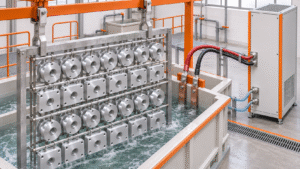
anodizing rectifier procurement for shared busbar production layouts require a clear connection between the purchase specification, the delivered equipment and the acceptance evidence. This guide focuses on the information an industrial buyer and project integrator should agree before releasing the order.
Define the project problem
A shared production layout can create uncertainty about which electrical and process interfaces are included in a rectifier quotation. Buyers need to identify the intended connection arrangement and operating states before asking suppliers to compare solutions.

Build the selection basis
An anodizing power supply belongs within a larger process that includes workpieces, racks, the bath and line control. Procurement needs a clear electrical envelope and a description of the intended production states. Ask the supplier to review the selected configuration against these cases and identify installation and utility requirements. Electrical acceptance should document the functions actually measured, while coating thickness, appearance and other process properties remain part of the separate process trial. Keep equipment and drawing revisions attached to the records. A later change to rack loading, connections or the production sequence needs to be compared with the approved envelope before the earlier result is reused.
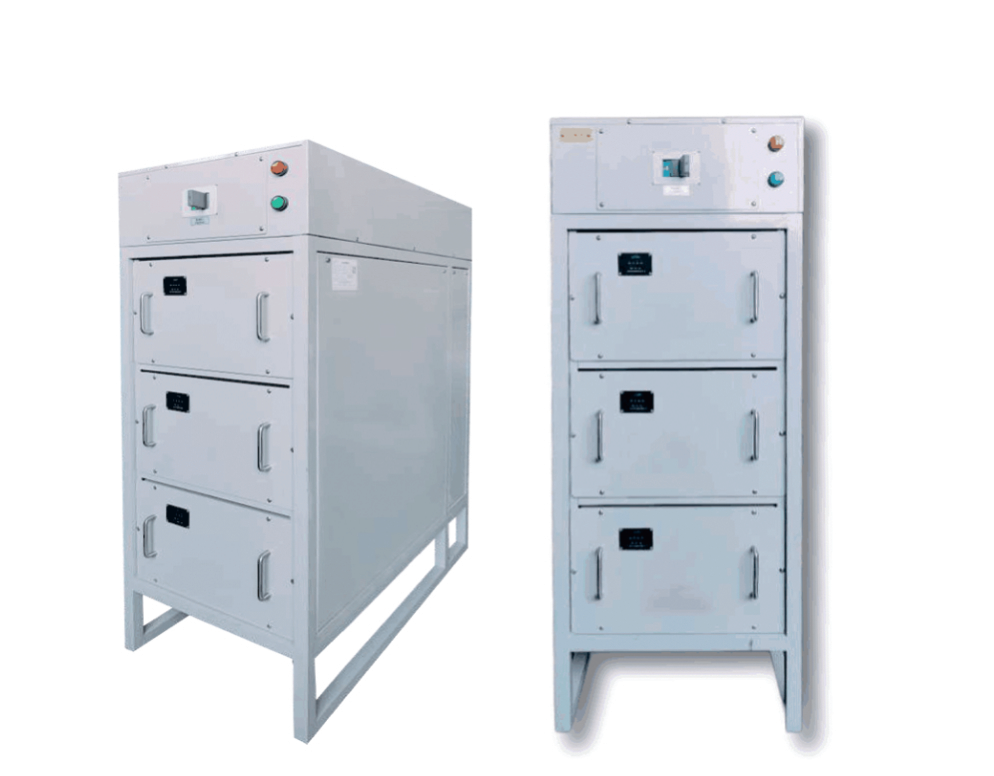
Provide the proposed busbar layout, rack loading range and control sequence. Ask the supplier to state the reviewed configuration and exclusions. Confirm who owns connection design, protection coordination and installed measurements. The number of cabinets in a product image does not establish permission to connect outputs together or to share a busbar in an unspecified arrangement.
Information to resolve before quotation
| Project input | Required handover evidence |
|---|---|
| Project connection diagram and operating states | Approved project requirement with a revision and an owner. |
| Rack area and expected load envelope | Supplier response identifying the reviewed configuration and exclusions. |
| Responsibility for busbar and terminal interfaces | Drawing or schedule tied to the actual installation. |
| Agreed control and protection ownership | Inspection or test record for the agreed operating case. |
| Load cases used for electrical acceptance | Responsibility and release condition recorded in the handover list. |
| Separate coating and site-dependent acceptance stages | Open action retained until the responsible party accepts the evidence. |
Plan the acceptance and handover
A planning acceptance matrix should link each agreed load case to the approved connection drawing. Record electrical output and control behavior separately from anodized coating inspection. If the final installation changes, review the affected cases. Preserve any requirement that can be demonstrated only with the actual tanks and workpieces as a named site action.
The sequence above is a planning example, not a reported customer installation or a guarantee of performance. Establish the actual test arrangement and responsibilities with the equipment supplier and the project owner. Record the configuration and conditions used, preserve deviations and state which checks remain for site commissioning. Detailed installation, electrical work and operating procedures should follow the approved project and supplier documentation.
Who should use this checklist?
This review is intended for industrial purchasing teams, equipment integrators and maintenance or process personnel preparing a defined project. It is most useful when the buyer can provide installation information and assign owners to the remaining questions. It is not a substitute for a model-specific selection or a complete process design. If essential operating information is missing, request clarification rather than accepting an apparently similar catalog unit as an approved replacement.
Prepare an RFQ that suppliers can answer
Send the project requirement, the relevant drawing or process sketch, the intended operating envelope and the information listed in the table. Include the required quantity, delivery expectations, installation location, control or utility interfaces and the documents needed for receiving inspection. Ask the supplier to distinguish included equipment, optional items and exclusions. Keep the approved response and its revision attached to the order so later changes can be assessed against the same basis.
Questions before ordering
Can outputs be combined because the units look similar?
Appearance is not a technical approval. Obtain a configuration-specific connection review and the required operating instructions from the supplier. Electrical design and installation decisions must be made for the actual project, not inferred from a catalog arrangement.
What evidence should stay with the delivered equipment?
Keep the accepted quotation, equipment identifiers, approved configuration and drawings, inspection or test records, deviation status and the current service-parts information. Assign an owner to any remaining installed-system or process trial. A general brochure should remain background information rather than replacing this project-specific evidence.
Discuss the anodizing power supply product family with QEEHUA and send your project details for an RFQ. Identify the conditions still requiring review so the proposed configuration and acceptance plan can be assessed together.