Low-Current Electrolysis Power Supply Qualification for Pilots
For low-current electrolysis power supply qualification, specify the smallest current your copper-recovery pilot must control, then request evidence at that operating point. A maximum-current rating or a display with many digits does not establish usable low-current regulation. Compare programmed current, independent measurement, internal readback and the active control mode under an agreed test configuration. This is a purchasing and factory-acceptance question for pilot-plant integrators and process engineers. It is separate from choosing a general copper-recovery rectifier or demonstrating how much copper a particular bath can recover.
Start with the pilot’s actual operating window
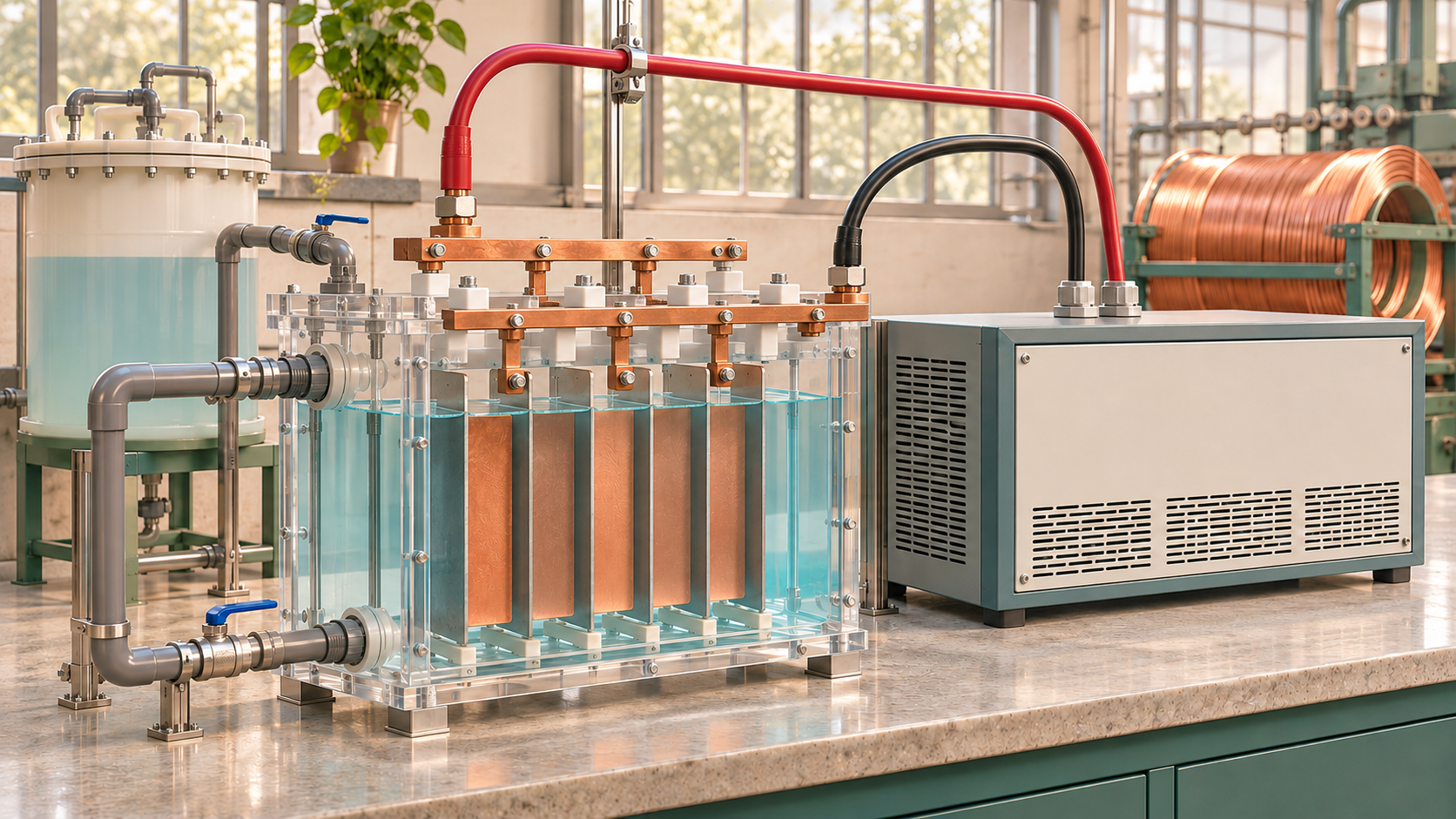
List the initial, routine and lowest intended current settings in absolute units. Identify whether one supply serves a single cell or a group of cells, and record the electrical connection arrangement. Define the voltage boundary, intended run duration and cooling conditions. Do not scale a larger production supply down by percentage alone: ask the supplier to confirm the controllable range of the proposed configuration.
A wire-drawing rinse pilot may investigate several electrode arrangements or feed conditions. Those process changes should be documented alongside the electrical test. The purchasing decision here is whether the supply can reproduce the requested low-current operating window with suitable evidence, rather than whether one demonstration produces an attractive-looking deposit.
Separate the setting, the readback and the reference measurement
The programmed setting is the command sent to the supply. Readback is the value reported by its measurement system. An independent measurement provides another observation with its own range, uncertainty and sampling behavior. Record all three rather than treating a matching front-panel setting and display as independent proof.
Request the programming resolution, readback resolution and applicable accuracy conditions separately. Use a measurement range appropriate to the intended current. A small displayed increment does not establish a small measurement error. For a primary example of how manufacturers distinguish these checks, the Keysight programmable DC supply manual describes separate low-range programming and readback tests. Its model-specific limits must not be transferred to another supplier’s rectifier.
Agree an acceptance schedule before requesting a demonstration
Use a manufacturer-approved test arrangement operated by qualified personnel. Agree the load, instruments, connection boundaries, warm-up conditions, sampling period and permitted deviations before the demonstration. Test points should represent the buyer’s low, intermediate and upper intended pilot operating conditions. The supplier should identify assumptions and any conditions that fall outside the offered operating range.
| Buyer Need | Recommended Product | Key Specification | Why It Matters |
| Reproducible low-current pilot operation | Application-matched electrolytic power supply | Confirmed minimum regulated current and voltage boundary | Establishes the operating window to demonstrate |
| Credible acceptance evidence | Supply with an agreed measurement and reporting package | Programming, readback and independent measurement conditions | Keeps command values separate from observations |
| Integration with pilot controls | Confirmed control-interface configuration | Command scaling, mode status and fault signals | Allows the integrator to interpret recorded results |
| Repeat procurement | Documented accepted configuration | Hardware, software and test-record revision | Connects later deliveries to the tested arrangement |
Record when a voltage boundary changes the control mode
A current-control test needs an agreed voltage boundary. Ask the supplier to explain how the proposed unit reports its active regulation mode and a reached limit. Log the current command, measured output, voltage and mode status together. A trace collected while the intended control mode is inactive cannot establish performance in that mode.
Include the expected response to an interrupted run and the conditions for a deliberate restart. Do not assume a communication command, retained setting or restored mains supply produces the restart behavior your process requires. Specify those behaviors in the acceptance schedule and request configuration-specific confirmation.
Keep electrical evidence separate from cell condition
For the later process trial, record electrolyte sampling, electrode condition, immersion arrangement and circulation alongside electrical observations. Use a controlled comparison when changing one of these conditions. Stable electrical readings do not establish copper recovery efficiency, deposit quality or discharge compliance; those outcomes need their own measurements and acceptance criteria.
Photograph electrode condition and retain the run identification with the data. An electrical qualification record should state what was tested and what remains open for the process trial. This prevents a successful supply demonstration from being treated as an accepted treatment process.

Define the purchase boundary and the intended buyer
Best for: integrators procuring a supply for repeatable, low-current copper-recovery pilot work. Suitable for: process engineering teams and industrial laboratories able to define their test arrangement, electrical interfaces and acceptance authority. Not suitable for: selecting equipment solely from a maximum-current label, or treating an unrecorded bath demonstration as a complete acceptance test.
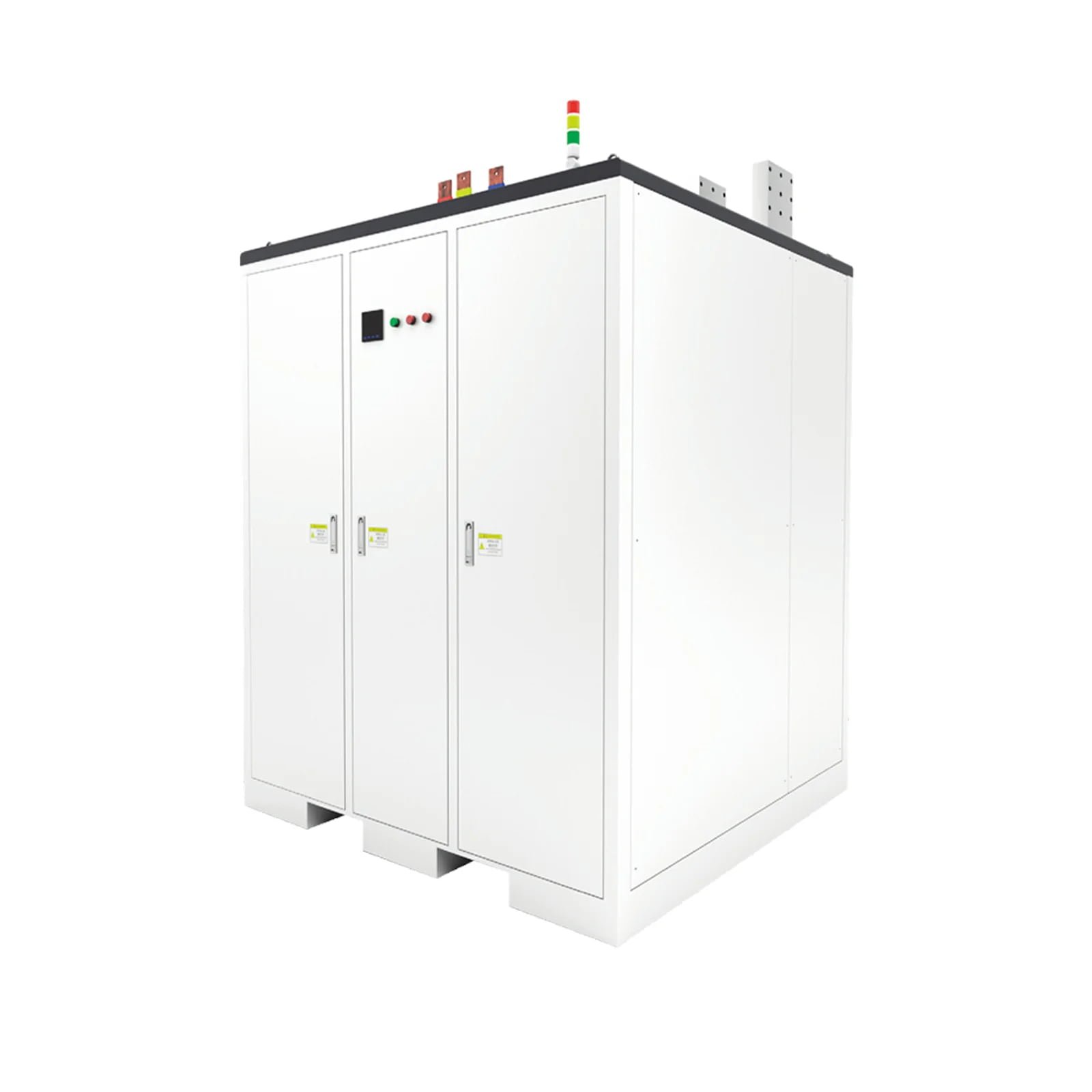
Ask whether the requested interface, cooling arrangement, data export, cabinet layout and identification can be provided for the proposed configuration. Availability and any customization remain subject to the supplier’s written confirmation. Request the relevant test records and offered documentation; do not infer certification or a special accuracy class from a product photograph.
Questions before ordering
What should we send with the first inquiry?
Provide the lowest, routine and highest intended current, voltage boundary, cell connection arrangement and run duration. Include site conditions, cooling provision, required control interface and the measurement evidence you intend to review. State the trial quantity and later quantity separately. Attach the acceptance schedule, or identify the unresolved items that the supplier must address before quoting.
Is the lowest displayed current setting enough to approve the supply?
No. Establish whether that setting is inside the supplier’s confirmed regulated operating range and under which voltage and load conditions. Agree how actual current will be measured and how programming and readback results will be reported. A display setting is useful input to a test; it does not replace evidence collected at the requested operating point.
Can the same record demonstrate current accuracy and copper recovery?
Keep the acceptance decisions separate. The electrical record describes settings, measurements, control modes and the tested supply configuration. A recovery trial also needs process inputs, sampling and outcome measurements. The two records should share a run identifier where useful, but electrical stability alone does not demonstrate recovered mass, deposit quality or the acceptability of the remaining solution.
Which configuration details need confirmation before repeat orders?
Retain the accepted electrical operating window, control interface, cooling method, hardware and software identification, and the agreed test method. Ask the supplier how changes affecting these items will be communicated. Define which changes require a new review or demonstration. A repeat purchase should refer to the approved configuration and evidence rather than relying only on a familiar product name.
When should the pilot supply be released for shipment?
Agree release after the required configuration documents and acceptance results have been reviewed by the named buyer representative. Close deviations or record an explicit accepted disposition. Confirm packing, included accessories, identification and the delivery basis separately. Request an actual schedule in the quotation; this qualification guide establishes no fixed production lead time, stock position or promised delivery date.
RFQ checklist and a controlled next step
Send the specification and acceptance schedule through the QEEHUA contact page. Ask for a proposed electrolytic supply configuration, its confirmed operating boundary, a demonstration plan and a quotation identifying exclusions.
- What minimum current must remain controllable, and under what voltage boundary?
- Which cell connections, measurement ranges and sampling conditions will be used?
- Which mode-status, fault and restart information must the pilot controller receive?
- Who approves the electrical test and the separate process trial?
- What quantity, destination, customization and delivery target should the offer cover?
Use the answers to compare a concrete configuration and its acceptance evidence before releasing the pilot order.