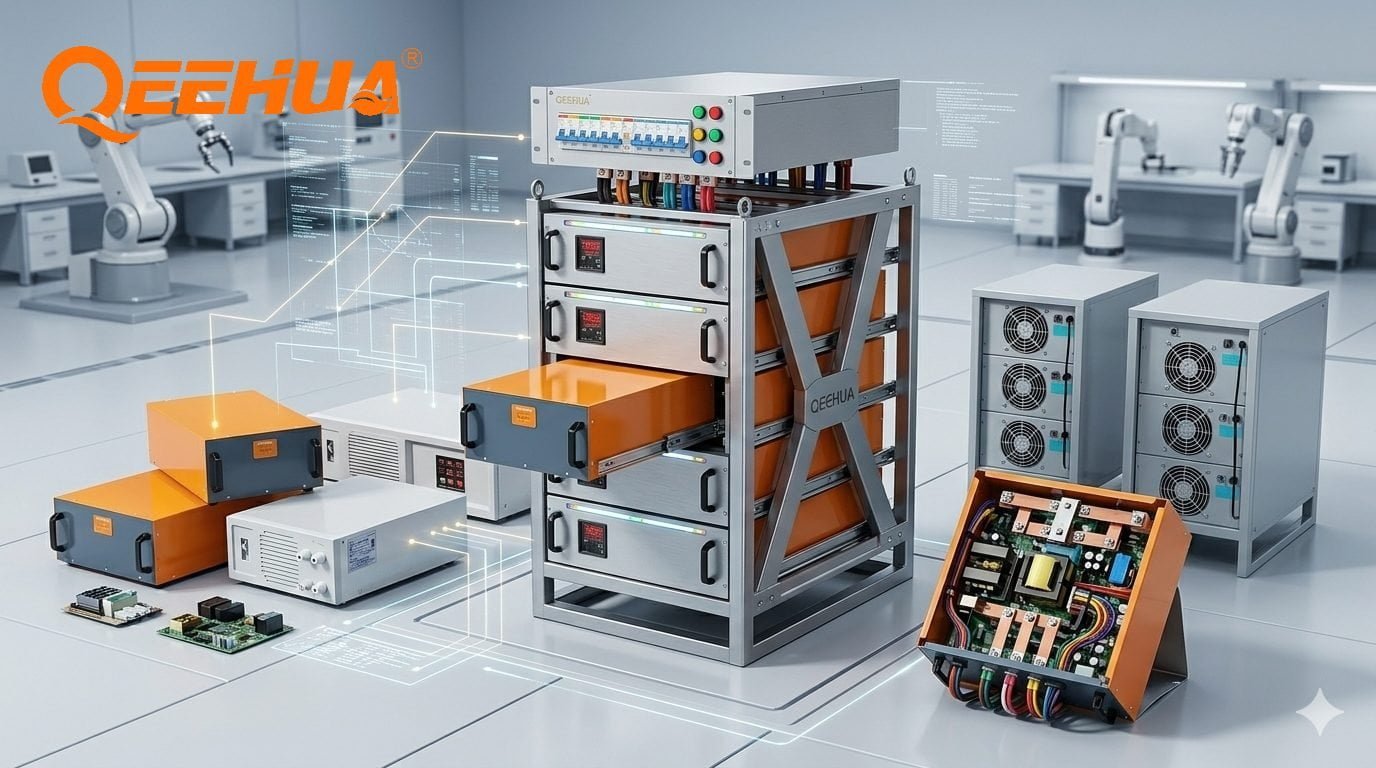
Understanding Modular Rectifier Technology for Industrial Applications
In the evolving landscape of industrial power electronics, modular rectifier design has emerged as a critical innovation for manufacturers seeking both flexibility and high performance. QEEHUA’s modular rectifier series, operating within the 0-12V and 0-20KA specification range, represents a significant advancement in precision power control for electroplating, surface treatment, and specialized electrochemical processes across South China’s manufacturing hub.
A modular rectifier is a power conversion system composed of standardized building blocks that can be configured, expanded, or reconfigured based on specific application requirements. Unlike traditional monolithic rectifier designs, modular systems offer unprecedented flexibility in voltage and current tuning, making them ideal for workshops in Guangdong, Fujian, and Jiangsu provinces where production runs frequently change between different metal finishing specifications.
The core advantage of QEEHUA’s modular approach lies in its ability to deliver stable DC output while maintaining the modularity required for modern smart factories. Each module operates independently yet integrates seamlessly into a unified control system, enabling operators to adjust parameters in real-time without system-wide shutdowns.
Technical Specifications and Performance Metrics
Voltage and Current Parameters
QEEHUA’s modular rectifier series achieves output capabilities of 0-12V at currents reaching 20KA, positioning these units as optimal solutions for low-voltage, high-current applications. The precise voltage regulation maintains stability within ±0.5% under varying load conditions, a specification that proves essential for quality-critical processes such as decorative chromium plating, nickel sulfamate applications, and precious metal recovery operations common among workshops in Shenzhen, Dongguan, and Guangzhou industrial zones.
The current density control mechanism allows operators to set parameters between 0.5-8ASD (Amperes per Square Decimeter), providing the granular control required for consistent coating thickness distribution across complex workpiece geometries. This level of control directly correlates with reduced material waste and improved first-pass yield rates.
Efficiency and Thermal Management
Modern modular rectifiers from QEEHUA achieve energy conversion efficiencies exceeding 92% at full load operation. The intelligent power module design incorporates advanced IGBT switching technology, which minimizes switching losses while reducing electromagnetic interference (EMI) emissions to levels compliant with EN 55011 Class A standards.
Thermal management presents one of the most significant challenges in high-current DC power systems. QEEHUA addresses this through a combination of liquid cooling channels integrated directly into the power module architecture and intelligent fan speed control that responds to real-time thermal sensors. This dual approach ensures that module junction temperatures remain within safe operating limits even during extended 100% duty cycle operations typical of automated plating lines.
FAQ Section: Modular Rectifier Selection
Q: What applications are best suited for 0-12V/0-20KA modular rectifiers?
A: These specifications make QEEHUA modular rectifiers ideal for precision electroplating applications including gold and silver plating (1-6V operation), nickel sulfamate processes, copper sulfate decorative plating, and zinc-nickel alloy coating. The low voltage range combined with high current capacity also supports cathodic protection systems and small-scale electrolysis operations.
Q: How does modular design improve maintenance compared to traditional rectifiers?
A: Modular architecture allows hot-swapping of individual power modules without shutting down the entire system. When a module requires maintenance, operators in Dongguan and Shenzhen facilities can replace it in under 15 minutes, minimizing production downtime. Each module includes self-diagnostic capabilities that report operational status to the central control system.
Q: Can modular rectifiers be integrated with existing automation systems?
A: Yes, QEEHUA modular rectifiers support standard industrial communication protocols including Modbus RTU, Profibus, and Ethernet/IP. This enables seamless integration with PLC-based automation systems commonly deployed in South China’s smart manufacturing facilities, allowing remote parameter adjustment and real-time monitoring through SCADA interfaces.
Q: What cooling options are available for modular rectifier installations?
A: QEEHUA offers three cooling configurations: forced air cooling for installations with adequate ventilation, indirect water cooling for high-density production environments, and direct liquid cooling for processes requiring minimal thermal footprint. Local suppliers in Guangdong can provide installation support and coolant loop design assistance.
Installation and Operational Considerations
Site Preparation Requirements
Proper installation of modular rectifier systems requires attention to electrical infrastructure and environmental conditions. The facility’s three-phase power supply must provide stable voltage within ±10% of nominal, with harmonic distortion levels below 5% THD to ensure optimal rectifier performance and longevity.
QEEHUA recommends allocating dedicated ground fault protection (GFCI) for each rectifier unit, particularly in facilities near water treatment plants or chemical processing zones where grounding integrity may be compromised by environmental factors. The rectifier enclosure should maintain minimum clearances of 500mm on all sides for maintenance access and adequate airflow circulation.
Operator Training and Safety Protocols
Personnel operating modular rectifier equipment must receive training covering emergency shutdown procedures, parameter adjustment protocols, and routine inspection schedules. QEEHUA provides comprehensive documentation in both English and Chinese, with video tutorials available through their technical support portal for operators in the Pearl River Delta region.
Safety considerations include mandatory use of insulated tools when adjusting output terminals, regular verification of grounding connections, and monthly calibration checks of current measurement systems. Facilities in humid environments such as coastal Guangdong should increase inspection frequency to quarterly intervals due to elevated corrosion risks.
Why South China’s Manufacturers Choose QEEHUA Modular Solutions
The decision to deploy modular rectifier technology reflects broader trends in regional manufacturing optimization. As competitive pressures intensify in the Pearl River Delta and Yangtze River Delta industrial corridors, facilities must balance capital expenditure constraints against the need for flexible, high-quality production capabilities.
QEEHUA’s modular rectifier platform addresses this challenge through scalable architecture that grows with production requirements. A facility can begin with a single-module configuration and expand to multi-module systems as order volumes increase, avoiding premature capital commitment while maintaining upgrade pathways.
The combination of localized technical support, rapid spare parts availability through regional distribution centers, and compliance with international quality standards (ISO 9001, CE certification) makes QEEHUA modular rectifiers particularly attractive to export-oriented manufacturers serving global supply chains.