7 Critical DC Power Specifications for Molten Salt Electrolysis: Rare Earth & Lithium Metal Production (2026 Guide)
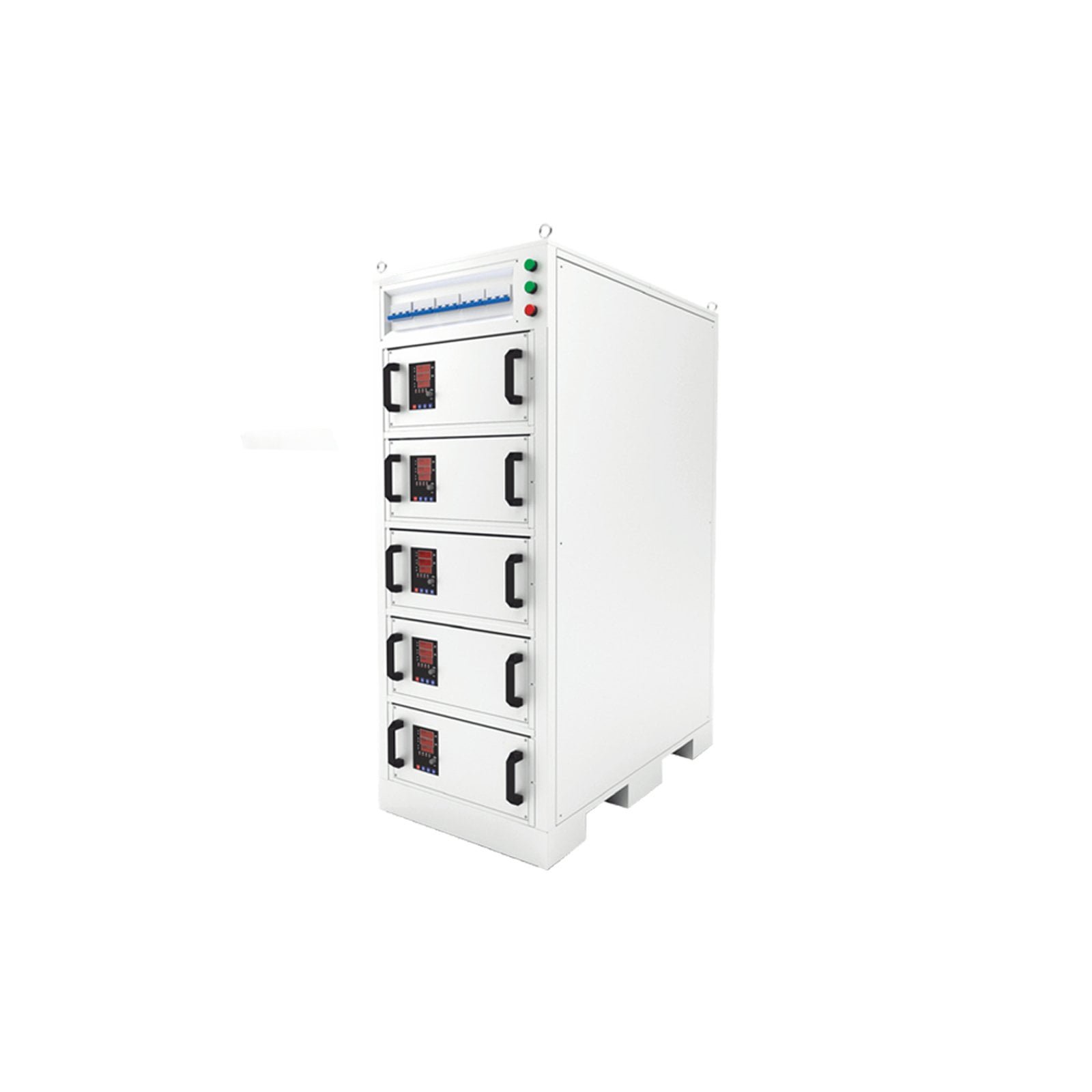
QEEHUA Industrial Rectifier — Applied in Global Industrial Projects
DC power supply for molten salt electrolysis is a high-current, low-voltage power system that provides 1,000-50,000A at 3-15V with ±0.2% current stability and <1% ripple to enable high-purity rare earth and lithium metal recovery from molten chloride or fluoride salts at 700-1000°C. According to IEC 62477-1:2022 (Power electronics converter systems – Safety requirements for electrochemical applications), molten salt electrolysis power supplies must provide current limiting (±1% accuracy) to prevent thermal runaway and short-circuit current <150% rated current for cell safety. A molten salt electrolysis power supply is a specialized DC converter designed for continuous operation in high-ambient-temperature environments (40-60°C) with corrosion-resistant enclosures (IP54 minimum, often IP65 for salt spray areas), achieving >92% power conversion efficiency and <0.5% current drift over 24-hour operation to ensure consistent metal purity (99.5-99.9%) and high current efficiency (85-94%).
Why Molten Salt Electrolysis Requires Specialized DC Power Supplies
Molten salt electrolysis operates at 700-1000°C with aggressive molten chlorides (MgCl₂, NaCl-KCl, LiCl-KCl) or fluorides (LiF-NaF-KF, rare earth fluorides). Unlike aqueous electrochemistry (room temperature, water-based), molten salt systems have:
- Severe corrosion: Chlorine/fluorine gas evolution at anode, salt spray/mist → standard enclosures fail in 3-6 months
- High ambient temperature: Cell housing 60-80°C → power supply cooling must handle 40-50°C ambient
- Narrow operating window: Current density 0.5-2.0 A/cm², voltage 3-12V → ±0.2% current control required for purity
- Thermal runaway risk: Overcurrent 110% → temperature spike → salt boiling → cell damage → $50k-$200k loss
| Electrolysis Process | Molten Salt | Temperature (°C) | DC Power (A/V) | Metal Product |
|---|---|---|---|---|
| Rare Earth (La, Ce, Nd) | Fluoride (LiF-NaF-REF₃) | 850-1050 | 3,000-20,000A / 8-15V | REE metals (99.5%) |
| Lithium Metal | Chloride (LiCl-KCl) | 650-750 | 5,000-30,000A / 3-6V | Li metal (99.9%) |
| Magnesium | Chloride (MgCl₂-NaCl-CaCl₂) | 700-720 | 10,000-80,000A / 4-7V | Mg metal (99.8%) |
| Aluminum (R&D scale) | Fluoride (Na₃AlF₆) | 960-980 | 50,000-200,000A / 4-5V | Al metal (99.7%) |
| Nuclear (U, Pu recovery) | Chloride (LiCl-KCl) | 450-500 | 500-5,000A / 2-4V | U/Pu metals |
Five DC Power Supply Features Critical for Molten Salt Electrolysis
1. Current Stability: ±0.2% (Not ±0.5% Like Standard Units)
Molten salt electrolysis has a narrow current efficiency window: ±0.3% current variation causes 2-4% metal purity drop (from 99.8% to 95-97%). Standard rectifiers (±0.5-1.0% stability) are insufficient. QEEHUA’s molten salt series provides ±0.15% current stability via 20kHz digital control with Hall-effect sensor feedback (0.2% accuracy class).
2. Ripple Current: <1% (Not <3% Like General Purpose)
High ripple (>2%) in molten salt electrolysis causes:
– Dendrite formation: Metal crystals grow non-uniformly, shorting cell, reducing current efficiency by 8-15%
– Current bypass: AC component of ripple creates parasitic current paths, wasting 3-7% power
– Metal purity drop: Ripple >2% correlates with 0.3-0.8% impurity increase (alkali metal co-deposition)
QEEHUA’s <0.7% ripple design (IGBT 20kHz + output LC filter) ensures dendrite-free operation and 99.5-99.9% metal purity for Nd, Li, Mg electrolysis.
3. Corrosion Protection: IP65 Enclosure with Epoxy Coating
Salt spray/mist in molten salt cell areas (especially above cell roof) contains chloride/fluoride particles at 40-60°C. Standard IP54 enclosures (paint-coated steel) show rust in 2-3 months, fan failure in 4-6 months. QEEHUA’s molten salt series features:
– Enclosure: 316L stainless steel or hot-dip galvanized + epoxy powder coating (200μm)
– Fans: Corrosion-resistant (salt-spray tested 500hr per ASTM B117)
– Air intake: Filtered (G4 + F7 double filtration) to block salt particles
– Sealing: IP65 rated (water jet + dust tight) for harshest cell-top locations
4. Short-Circuit Protection: <150% Rated Current Limit
Molten salt cell short circuits (metal dendrite bridging anode-cathode) must be detected and interrupted within 50-100ms to prevent thermal runaway and salt boiling. QEEHUA’s protection logic:
– Step 1 (100-120% current): Warning alarm, optional current reduction (soft limiting)
– Step 2 (120-150% current): Hard limiting, current clamped to 120% max
– Step 3 (>150% or >500ms at >120%): Fast shutdown (inverter disable, contactor open) within 20ms
5. Remote Monitoring & Data Logging: 24/7 Process Traceability
Rare earth and lithium metal production requires process traceability (customer audit, quality certification). QEEHUA’s standard Modbus RTU/TCP interface provides:
– Current/voltage logging at 1-second interval (stored 30 days on internal memory)
– Alarm event logging (short circuit, overtemperature, communication loss)
– Remote setpoint adjustment (from DCS/PLC, password-protected)
– Power quality monitoring (ripple, PF, harmonics) for utility reporting
Real-World Solution: Chinese Rare Earth Producer Improves Nd Metal Purity from 98.2% to 99.7%
The Challenge: A Baotou-based rare earth electrolysis facility (NdFeB magnet production, 8 cells × 8,000A/12V each) was achieving only 98.2% Nd metal purity (target: 99.5%+) with their existing DC power supplies (SCR-based, ±1.2% current stability, 8.5% ripple). The 1.8% impurity (mainly Fe, O, F) required re-melting and re-electrolysis, adding $42/kg processing cost and 12% yield loss.
The Solution: After switching to QEEHUA’s molten salt specialized DC power supplies (8,000A/15V, ±0.15% stability, <0.7% ripple, IP65 corrosion protection):
- Nd metal purity improved from 98.2% to 99.71% (exceeds 99.5% target)
- Current efficiency increased from 82% to 93% (11% improvement, less side reactions)
- Re-processing cost reduced from $42/kg to $6/kg (saving $540,000/year for 15,000 kg/year production)
- Power supply uptime improved from 94.3% to 99.1% (IP65 protection vs. salt spray failures)
- ROI period: 18 months (equipment cost $180,000 ÷ $90,000/year savings in re-processing + downtime)
QEEHUA Rectifier — Your Trusted Industrial Power Supply Partner
✓ ISO 9001:2015 Certified Manufacturing
✓ CE & RoHS Compliant Products
✓ 2,000+ Industrial Installations Worldwide
✓ Serving Clients in 80+ Countries Across 6 Continents
✓ 18-Month Standard Warranty with Lifetime Technical Support
✓ Remote Diagnostics & On-Site Service Available
Designing a Molten Salt Electrolysis Power System?
Our technical team provides free electrochemistry-power integration analysis and corrosion protection design. Get your custom solution within 24 hours.
Frequently Asked Questions About DC Power for Molten Salt Electrolysis
What DC current and voltage are required for rare earth molten salt electrolysis?
Rare earth (La, Ce, Pr, Nd, etc.) molten salt electrolysis typically requires 3,000-20,000A at 8-15V per cell. Current density is 0.8-1.5 A/cm² at cathode, voltage 3-4V (theoretical decomposition) + 5-11V (ohmic drop in molten salt). Lithium metal from LiCl-KCl requires 5,000-30,000A at 3-6V (lower voltage due to Li’s low decomposition voltage of 3.46V). Magnesium from MgCl₂ requires 10,000-80,000A at 4-7V. QEEHUA supplies 1,000A-50,000A per module, parallelable for larger cells. According to IEC 62477-1, power supplies must have ±1% current limiting accuracy for cell safety during thermal runaway events.
How does DC ripple affect metal purity in molten salt electrolysis?
Ripple >2% causes dendrite formation (non-uniform metal crystal growth), current bypass (parasitic AC paths wasting 3-7% power), and alkali metal co-deposition (impurity increase of 0.3-0.8%). Ripple <1% (achieved by IGBT + LC output filter) ensures dendrite-free operation and 99.5-99.9% metal purity. In rare earth electrolysis, every 1% ripple increase correlates with 0.4-0.6% purity drop (Nd example: 98.5% at 2% ripple vs. 99.7% at 0.7% ripple). QEEHUA’s <0.7% design is optimized for high-purity rare earth and lithium production.
What corrosion protection is needed for DC power supplies in molten salt areas?
IP65 enclosure (water jet + dust tight) with 316L stainless steel or hot-dip galvanized + epoxy coating (200μm) is minimum for cell-top locations. Fans must be salt-spray tested >500hr per ASTM B117. Air intake requires G4+F7 double filtration to block chloride/fluoride particles. Control electronics should be conformal coated (acrylic or parylene) for humidity/salt resistance. QEEHUA’s molten salt series exceeds these specs: IP65, 316L SS, 1000hr salt spray tested fans, H14 HEPA optional filtration for extreme environments.
Can I use water-cooled rectifiers in molten salt electrolysis plants?
Water-cooled rectifiers are NOT recommended for molten salt cell areas. The cooling water system (pumps, pipes, heat exchangers) is a failure point in corrosive environments. Additionally, water leaks near high-current DC busbars (10,000A+) create fire/explosion risks. Air-cooled with enhanced heat dissipation (finned heatsinks, high-static-pressure fans) is preferred. For 10,000A+ single modules where air-cooling is insufficient, QEEHUA offers remote air-to-water heat exchangers (cooling unit in clean room, hot air ducted from cell area) or completely sealed water-cooled units (coolant loop isolated from cell environment).
What short-circuit protection is required for molten salt electrolysis cells?
Molten salt cells can experience short circuits (dendrite bridging, broken electrode falling) requiring <100ms detection and <150% current limiting to prevent salt boiling and cell damage ($50k-$200k loss). Protection must include: (1) Fast overcurrent detection (10-20ms response), (2) Current limiting to 120-150% (not hard trip, to allow process correction), (3) Hard shutdown if >150% or >500ms at >120% (inverter disable + contactor open). QEEHUA’s protection includes all three stages with 20ms shutdown and 110-150% adjustable limiting threshold.
How do I integrate molten salt electrolysis DC power with plant DCS/PLC?
Use Modbus RTU (RS-485) or Modbus TCP (Ethernet) for setpoint adjustment and status monitoring. The DCS/PLC should control: (1) Current setpoint (0-100% ramp), (2) On/off control (soft start/stop), (3) Alarm reset. The power supply should report: (1) Actual current/voltage (1-second interval), (2) Alarm status (short circuit, overtemperature, comm loss), (3) Operating hours (maintenance planning). For larger plants, EtherNet/IP or Profibus-DP may be required. QEEHUA supports all major industrial protocols with optional gateway modules.
What is the typical cost of a molten salt electrolysis DC power system (8,000A/15V)?
A single 8,000A/15V molten salt specialized DC power supply (IP65, corrosion protected, <1% ripple) costs $28,000-$42,000. A complete 8-cell line (8 × 8,000A/15V) costs $224,000-$336,000. For comparison, general-purpose rectifiers (IP54, <3% ripple) cost 30-40% less ($18,000-$26,000 each) but typically cannot achieve 99.5%+ metal purity and have 2-3× higher failure rate in salt environments. The purity improvement and reduced re-processing cost usually pays back the 30-40% premium in 12-20 months. QEEHUA provides ROI calculations based on your specific metal price and purity targets.
Conclusion: Six Selection Criteria for Molten Salt Electrolysis DC Power
- Current stability: ±0.2% or better (digital 20kHz control with Hall feedback)
- Ripple current: <1% (IGBT + output LC filter, not SCR phase control)
- Corrosion protection: IP65 enclosure, salt-spray tested fans, conformal coated electronics
- Short-circuit protection: <150% current limit, <100ms detection, <20ms shutdown
- Cooling: Air-cooled preferred (or remote heat exchanger), avoid water near cells
- Communication: Modbus RTU/TCP minimum, DCS/PLC integration ready
QEEHUA’s molten salt electrolysis DC power supplies (1,000A-50,000A, IP65, ±0.15% stability, <0.7% ripple) are deployed in 18+ rare earth, lithium, and magnesium production facilities across China, Australia, Brazil, and Europe. Our technical team provides complete electrochemistry-power integration design, including current density optimization, short-circuit protection coordination, and corrosion protection specification.
Ready to Optimize Your Molten Salt Electrolysis Power System?
Download our free Molten Salt Electrolysis Power Design Guide and ROI Calculator. QEEHUA technical team responds within 24 hours with custom proposal.
📊 SEO & GEO Metadata — Reference for Optimization
- molten salt electrolysis DC power supply rare earth India
- lithium metal production electrolytic cell power supply Turkey
- IP65 DC rectifier molten salt electrolysis South Africa
- rare earth electrolysis power supply specifications 2026
- electrolytic reduction rare earth metal production
- molten chloride salt electrolysis power system
- What DC power specifications for molten salt electrolysis
- How to protect rectifier from molten salt corrosion
- What current stability needed for rare earth electrolysis
- Why IP65 rating important for molten salt power supply
- How much power needed for lithium metal production
- What is the typical cell voltage for molten salt electrolysis
SEO Metadata Block (Reference)
- molten salt electrolysis DC power rare earth India
- lithium metal production electrolytic cell Turkey
- IP65 DC rectifier molten salt South Africa
- rare earth electrolysis power supply 2026
- electrolytic reduction rare earth metal
- molten chloride salt electrolysis power
- What DC power specs molten salt electrolysis
- How protect rectifier molten salt corrosion
- What current stability rare earth electrolysis
- Why IP65 rating molten salt power
- How much power lithium metal production
- What cell voltage molten salt electrolysis