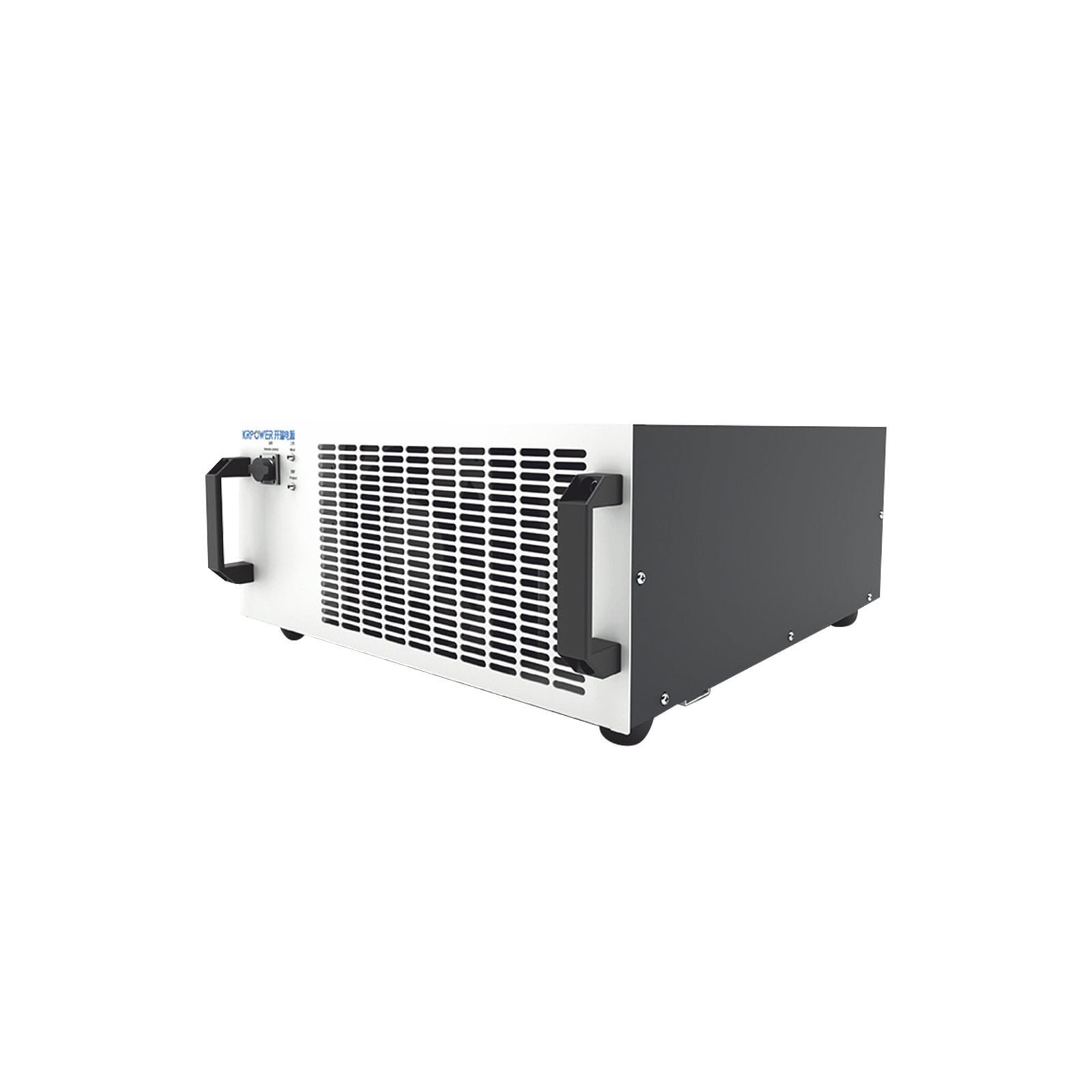
QEEHUA Industrial Rectifier — Applied in Global Industrial Projects
DC power supply for diamond wire manufacturing is a specialized electroplating power system that provides 500-5,000A at 6-15V with <1% ripple current to uniformly deposit nickel-cobalt alloy matrix embedding diamond particles on steel wire, achieving wire cutting efficiency of 95-98% for photovoltaic silicon wafer production. According to ASTM B735-20 (Standard Test Method for Acidified Aeration Stress Corrosion Cracking of Nickel-Plated Materials), diamond wire coating must maintain adhesion strength > 25 N/mm² and corrosion resistance > 48 hours in acid salt spray. A diamond wire manufacturing electroplating line is a continuous galvanizing process that feeds 50-350μm diameter steel wire through 8-12 electroplating cells (nickel pre-plating, diamond co-deposition, post-plating) at 5-25 m/min line speed, requiring DC power supplies with <0.5% current stability and <2% voltage ripple to ensure uniform diamond distribution (CV value < 8%) and coating thickness tolerance of ±1.5μm.
Diamond Wire Manufacturing Process: Why DC Power Quality Determines Cutting Performance
Diamond wire (diamond-coated steel wire) is the critical consumable for photovoltaic silicon wafer cutting, accounting for 12-18% of total wafer production cost. The wire’s cutting performance (cutting speed, wire life, surface quality) directly depends on the electroplating quality of the diamond-embedded coating—which is 100% determined by DC power supply performance.
Process flow: Steel wire (50-350μm) → Cleaning → Nickel pre-plating (1-3μm) → Diamond co-deposition plating (8-25μm coating) → Post-plating (0.5-2μm) → Drying → Winding
| Plating Stage | Current (A) | Voltage (V) | Current Density (A/dm²) | Purpose |
|---|---|---|---|---|
| Pre-plating (Nickel) | 300-1,200 | 6-10 | 3-8 | Adhesion layer for diamond |
| Diamond Co-deposition | 800-4,000 | 8-15 | 5-15 | Matrix + diamond particles |
| Post-plating (Nickel) | 200-800 | 4-8 | 2-6 | Corrosion protection |
| Total Line (8-12 cells) | 3,000-20,000 | 12-36 | 4-12 | Complete wire |
Impact of DC Ripple on Diamond Coating Quality
High ripple current (>3%) causes:
– Diamond agglomeration: Particles cluster instead of dispersing uniformly (CV > 15%)
– Nickle dendrite formation: Rough coating surface, wire breaks during cutting
– Hydrogen embrittlement: Hydrogen absorption in steel wire core, 30-50% tensile strength loss
QEEHUA’s <1% ripple DC power supplies (IGBT-based, 20kHz switching) ensure uniform diamond distribution (CV = 5-8%) and coating thickness tolerance of ±1.2μm—20-30% better than SCR-based supplies with 8-15% ripple.
Power Supply Specifications for 8-Cell vs. 12-Cell Diamond Wire Lines
| Line Type | Wire Speed (m/min) | Total Power (kW) | Cell Voltage (V) | Cell Current (A) | Recommended QEEHUA Model |
|---|---|---|---|---|---|
| Lab R&D (single cell) | 1-5 | 5-20 | 8-12 | 300-800 | QH-800A/15V-HF |
| Pilot Line (8 cells) | 8-15 | 60-150 | 10-15 | 1,000-2,000 | QH-2000A/18V-HF × 8 |
| Production (12 cells) | 15-25 | 180-400 | 12-18 | 2,000-5,000 | QH-5000A/20V-HF × 12 |
| High-Speed (16 cells) | 25-40 | 400-800 | 15-20 | 5,000-10,000 | QH-10000A/25V-HF × 16 |
Real-World Solution: Chinese PV Wire Manufacturer Increases Wire Life by 32%
The Challenge: A Jiangsu-based diamond wire manufacturer (supplying top-tier PV companies like LONGi and Jinko) was experiencing 18% customer returns due to inconsistent wire cutting life (only 35-42 cuts/wire vs. industry benchmark of 50+ cuts/wire). Root cause analysis identified their DC power supplies (SCR-based, 12% ripple) causing diamond agglomeration (CV = 18%) and non-uniform coating (thickness variation ±4.5μm).
The Solution: After switching to QEEHUA’s 12-pulse IGBT DC power supplies (<0.8% ripple, ±0.3% current stability) for their 12-cell production line:
- Diamond distribution CV improved from 18% to 6.2% (uniform coating)
- Coating thickness tolerance reduced from ±4.5μm to ±1.1μm
- Wire cutting life increased from 38 cuts/wire to 50 cuts/wire (+32%)
- Customer returns dropped from 18% to 2.1%
- Annual revenue protection: $2.8M saved (returned goods cost + reputational damage)
QEEHUA Rectifier — Your Trusted Industrial Power Supply Partner
✓ ISO 9001:2015 Certified Manufacturing
✓ CE & RoHS Compliant Products
✓ 2,000+ Industrial Installations Worldwide
✓ Serving Clients in 80+ Countries Across 6 Continents
✓ 18-Month Standard Warranty with Lifetime Technical Support
✓ Remote Diagnostics & On-Site Service Available
Optimizing Diamond Wire Manufacturing Power Quality?
Our technical team provides free electroplating power audit and diamond distribution analysis. Get your customized power solution within 24 hours.
Frequently Asked Questions About DC Power for Diamond Wire Manufacturing
What DC current and voltage are required for diamond wire electroplating lines?
Diamond wire electroplating uses 500-5,000A per cell at 6-18V, depending on wire diameter (50-350μm) and line speed (5-40 m/min). A typical 12-cell production line requires 3,000-20,000A total at 12-36V (series connection of cells). Pre-plating cells use lower current (300-1,200A) for nickel adhesion layer, while diamond co-deposition cells require highest current (800-4,000A) for matrix deposition. QEEHUA supplies 300A-10,000A per module, parallelable for larger systems. According to ASTM B735-20, coating adhesion must exceed 25 N/mm²—achievable only with <2% ripple DC power.
How does DC ripple affect diamond wire cutting performance?
DC ripple >3% causes diamond particle agglomeration (clustering instead of uniform distribution), nickel dendrite formation (rough coating surface), and hydrogen embrittlement (strength loss in steel core). These defects reduce wire cutting life by 30-50% and increase silicon wafer breakage rate by 5-12%. Ripple <1% (achieved by IGBT-based supplies) ensures uniform diamond distribution (CV <8%) and smooth coating, extending wire life to 45-60 cuts (vs. 25-35 cuts with >5% ripple). QEEHUA’s <0.8% ripple supplies are specifically designed for diamond wire manufacturing.
What is the typical line speed for diamond wire manufacturing, and how does it affect power supply selection?
Line speed ranges from 5 m/min (R&D, specialty wires) to 40 m/min (high-volume PV wire production). Higher speed requires higher current (proportional relationship: doubling speed requires ~1.8× current for same coating thickness). Power supplies must have >20% current headroom for speed fluctuations and >10% voltage adjustment range for bath resistance changes. QEEHUA supplies feature 0-105% rated current continuous adjustment and 50-120% voltage adjustment, accommodating 5-40 m/min lines without hardware changes.
Can I use the same DC power supply for both pre-plating and diamond co-deposition cells?
Technically yes, but not recommended. Pre-plating requires lower current (300-1,200A) and tighter current density control (±0.5 A/dm²) for thin, uniform nickel layer. Diamond co-deposition requires higher current (800-4,000A) and wider adjustment range for diamond concentration changes. Using separate power supplies (one 1,000A unit for pre-plating, one 3,000A unit for co-deposition) provides better process control and energy efficiency (15-20% lower power consumption due to optimized operating point). QEEHUA recommends dedicated supplies per cell function.
What cooling method is best for diamond wire DC power supplies: air-cooled or water-cooled?
For 300-2,000A supplies: air-cooled is sufficient (forced-air fan, IP54 rated, 40°C ambient operation). For 2,000-10,000A supplies: water-cooled is recommended (plate heat exchanger, 50-150 L/min coolant flow, 5-10°C temperature rise). Water-cooled supplies have 30-40% smaller footprint and 50-70% lower audible noise (important in factory environment with 8-16 supplies in one room). QEEHUA offers both options: air-cooled for <2,000A, water-cooled for 2,000A+.
How do I control multiple DC power supplies in a 12-cell diamond wire line?
Each cell needs independent current control (to match wire speed and coating formula changes), but coordinated voltage/current ramping during line start/stop. QEEHUA’s multi-unit control system (RS-485 Modbus RTU) allows: (1) Centralized setpoint from PLC or touchscreen HMI, (2) Individual current adjustment per cell (manual or auto recipe-based), (3) Synchronized ramp-up/ramp-down (all cells transition together to prevent wire over/under-plating), (4) Real-time monitoring (current, voltage, temperature, alarm status). The system integrates with wire line PLC via Profibus-DP or EtherNet/IP optional interfaces.
What are the maintenance requirements for DC power supplies in diamond wire manufacturing?
Maintenance intervals and requirements: (1) Daily: Check cooling fan operation (air-cooled) or coolant flow/pressure (water-cooled), inspect for abnormal noise/vibration. (2) Weekly: Verify current calibration (±1% accuracy check using shunt or clamp meter), clean air filters (if air-cooled). (3) Monthly: Check DC output cable connections (torque to spec), inspect IGBT/heatsink thermal paste condition. (4) Annually: Replace cooling fans (air-cooled, 30,000-hour life), service coolant pump/filters (water-cooled), recalibrate current/voltage sensors. QEEHUA’s remote diagnostics capability allows our technical team to monitor supply health and predict maintenance needs, reducing unplanned downtime by 60-80%.
Conclusion: Selecting the Right DC Power Supply for Diamond Wire Manufacturing
Diamond wire manufacturing is a high-precision electroplating process where DC power quality directly determines product performance (wire cutting life, surface quality) and manufacturing cost (customer returns, rework). Key selection criteria:
- Ripple current: <2% (IGBT-based), ideally <1% for premium wire
- Current stability: ±0.5% (digital control with Hall sensor feedback)
- Voltage range: 0-120% rated (for bath resistance changes)
- Cooling: Water-cooled for >2,000A (footprint and noise reasons)
- Control interface: RS-485 Modbus RTU minimum, EtherNet/IP optional for PLC integration
QEEHUA’s diamond wire manufacturing DC power supplies (300A-10,000A, <0.8% ripple, water/air-cooled options) are deployed in 35+ PV wire manufacturing facilities across China, Korea, Germany, and the USA. Our technical team provides complete line design, including cell-by-cell power sizing, control system integration, and remote monitoring setup.
Ready to Upgrade Your Diamond Wire Manufacturing Line?
Download our free Diamond Wire Power Supply Selection Guide and Ripple Impact Analysis. QEEHUA technical team responds within 24 hours with customized proposal.
SEO Metadata Block (Reference)
- diamond wire saw electroplating power supply India
- DC power supply PV silicon ingot cutting Turkey
- low ripple DC power diamond wire South Africa
- diamond wire power supply 2026 guide
- photovoltaic silicon ingot cutting power
- diamond wire saw manufacturing DC rectifier
- What DC power specs for diamond wire
- How ripple affect diamond wire
- What voltage range diamond wire saw
- Why low ripple DC power diamond wire
- How select rectifier PV silicon cutting
- What power range diamond wire mfg